
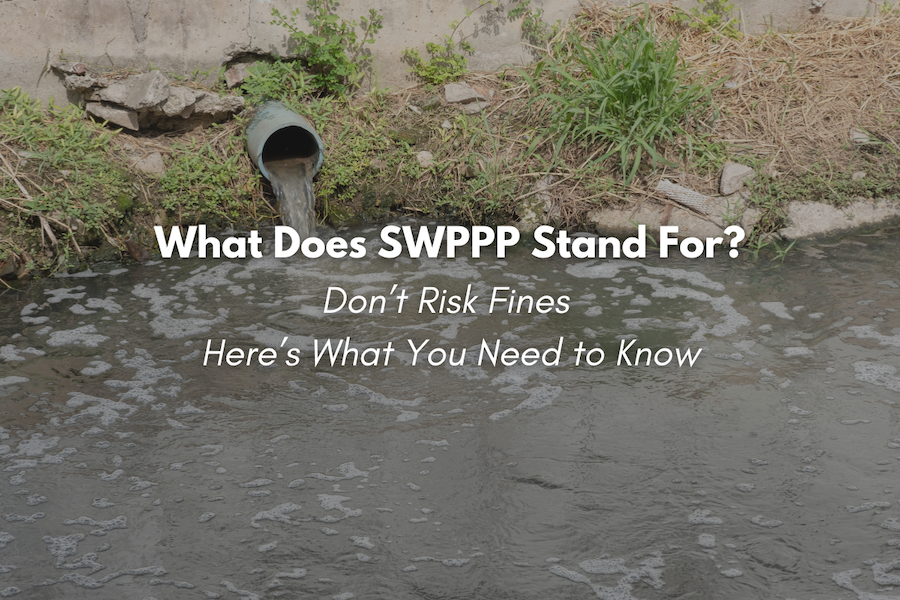
Let’s be honest, when you’re getting ready to build, the last thing you want is a pile of paperwork slowing you down. But if you’ve just been told you need a SWPPP, you’re probably wondering two things:What does SWPPP stand for? How serious is this… really?
As environmental scientists who help clients across Texas stay compliant and move their projects forward, we can tell you, it’s serious. Not just because the EPA says so, but because ignoring it could actually derail your timeline, rack up fines, or worse, bring your job site to a full stop.
So let’s break it all down, plain and simple.
What Does SWPPP Stand For? A Straightforward Answer
SWPPP stands for Stormwater Pollution Prevention Plan.
It’s a site-specific document required by the Environmental Protection Agency (EPA) and state environmental agencies like the Texas Commission on Environmental Quality (TCEQ). This plan outlines exactly how your construction site will prevent sediment, debris, and other pollutants from being washed into nearby water sources during a storm.
In simpler terms:
If you’re disturbing soil—digging, grading, building, you’re exposing bare earth. When it rains, that soil can easily run off into nearby creeks, ditches, or storm drains. Stormwater Pollution Prevention Plans (SWPPPs) are designed to prevent that pollution.
Who Needs a SWPPP and Why Knowing What SWPPP Stands For Matters
The general rule: If your project disturbs one acre or more, you need a SWPPP.
But there’s a catch—a “common plan of development” clause. Even if your individual lot is less than an acre, if it’s part of a larger development that totals over an acre, you’re still required to comply.
Common SWPPP triggers:
- New residential or commercial developments
- Large renovations or additions
- Roadwork and utility installations
- Municipal and industrial construction projects
A Quick Story from the Field
One of our clients, a real estate developer, was in the middle of a retail pad site project in Houston. They assumed their contractor had the SWPPP covered, but no one had submitted one.
A surprise inspection from the city turned into:
- A stop-work order
- Thousands in fines
- Two weeks of project delays while we scrambled to inspect the site, write the plan, and submit documentation
Why Ignoring Your SWPPP Could Cost You Big
Aside from the obvious regulatory headaches, ignoring Stormwater Pollution Prevention Plan requirements can come with steep penalties.
Financial Consequences:
- EPA fines can reach $53,000 per day, per violation
- Cities and counties can also issue fines and penalties
- Legal action from neighbors or environmental groups is possible if your runoff causes property damage
Project Delays:
- Stop-work orders are common
- Permits can be withheld or revoked
- Your job site can be flagged for additional inspections moving forward
Reputational Damage:
If you’re a builder, developer, or contractor trying to win new projects, these issues can come back to haunt you when clients start asking about your compliance track record.
What’s Actually Included in a Stormwater Pollution Prevention Plan?
Contrary to what some might think, a SWPPP isn’t just a generic document you download online. It’s a customized, site-specific plan that includes real strategies to manage stormwater runoff during construction.
A solid SWPPP includes:
- Site maps showing grading, drainage patterns, and control structures
- Erosion and sediment control plans (think: silt fences, inlet protection, stabilized entrances)
- Inspection and maintenance schedules
- Spill prevention and response plans
- Recordkeeping requirements
- Designated responsible parties
If it sounds like a lot… it is. That’s why we always recommend working with a professional who knows how to tie it all together.
Common Myths About SWPPPs (and What They Really Stand For)
Let’s bust a few myths we hear all the time:
“It’s just paperwork.”
Nope. It’s a legally binding plan that outlines specific environmental protections. If you get inspected, this is what the inspector will ask for first.
“My site is small, I don’t need one.”
Maybe, but if you’re part of a bigger development, you probably do. This is where the “common plan of development” rule comes into play.
“I’ll deal with it if someone asks.”
By then, it’s usually too late. Fines and delays often come before a second chance.
How to Make Sure Your SWPPP Is Compliant
There’s no shortage of cheap SWPPP templates online, but a one-size-fits-all approach can get you flagged.
Here’s what we recommend instead:
Work with professionals (like us)
We’re not just checking boxes. We walk your site, talk to your team, and create a plan that’s tailored to your project and local requirements.
Get your SWPPP done before breaking ground
Too many clients call us after the fact. The earlier we’re brought in, the smoother the process.
Don’t forget about inspections
A SWPPP isn’t “set it and forget it.” Weekly inspections are often required. We offer ongoing support to keep you compliant the whole way through.
Why Clients Trust Our Team With Their SWPPPs
We’ve been helping contractors, developers, and municipalities across Texas with environmental compliance for over 30 years.
We’ve worked on everything from single-lot infill builds to massive infrastructure projects. We know how to balance the regulations with the reality of construction timelines.
When you work with us, you’re not just getting a PDF, you’re getting a partner who helps you keep building without the compliance stress.
Final Thoughts: Now You Know What SWPPP Stands For, Don’t Let It Stall Your Project
We get it, this stuff isn’t fun. But it’s necessary. A Stormwater Pollution Prevention Plan (SWPPP) might not seem like a big deal until it is. And by then, you’re knee-deep in fines, delays, and paperwork that could have been avoided.
Whether you just found out you need a SWPPP or want a second set of eyes on your current plan, we’re here to help
Let’s Talk About Your Project
Need a SWPPP fast or just want to know if you need one at all? Give us a call or fill out our quick consultation form. We’ll walk your site, handle the paperwork, and keep your job site moving.