
If you’ve ever driven past an empty lot with a “No Trespassing” sign and wondered why nothing’s been built there in years, there’s a good chance contamination is part of the story. Here in Texas, land is a hot commodity, but not all land is ready for construction the moment you find it. Sometimes, it needs a little help and that’s where site remediation services come in.
At CRG Texas Environmental Services, we’ve spent decades helping property owners, developers, and investors turn contaminated land into safe, usable, and even high-value property. In this article, we’ll break down exactly what our site remediation services are, why they matter, and how we approach them in a way that gets your project moving while keeping you compliant and protected.
What Exactly Are Site Remediation Services?
Overall, site remediation services are the process of cleaning up soil, groundwater, or surface water so that it meets environmental safety standards. That can mean removing contaminated soil, treating polluted groundwater, or neutralizing hazardous materials.
Contamination can come from many sources:
-
Industrial or manufacturing waste left behind from previous operations
-
Stormwater runoff carrying oils, metals, or chemicals
-
Old dumpsites or landfills that weren’t properly closed
Here are some more red flags that tell you that you may need remediation.
We often compare remediation to renovating an old house. Except instead of pulling up old carpet and painting walls, we’re removing petroleum hydrocarbons from soil, treating lead in groundwater, or making sure hazardous vapors can’t migrate into future buildings.
Why Site Remediation Services Are Worth the Effort
Let’s be honest… remediation isn’t the flashiest part of property development. You don’t get to pick tile colors or see walls going up right away. But site remediation services are what make everything else possible.
One of our clients in Central Texas bought an old truck stop property at a price that seemed too good to be true. Turns out, the underground tanks had leaked over the years, leaving petroleum in the soil. The property couldn’t be developed until it was cleaned up.
After we completed the remediation and secured regulatory closure from the Texas Commission on Environmental Quality (TCEQ), the land appraised at nearly double the original purchase price. What started as a contaminated headache became a valuable, build-ready property.
That’s the power of remediation services. They’re not just about fixing a problem, they’re about unlocking potential.
Our Proven Site Remediation Process
Every site is unique, but our approach follows a proven structure that ensures safety, compliance, and efficiency.
Step 1: Site Assessment & Investigation
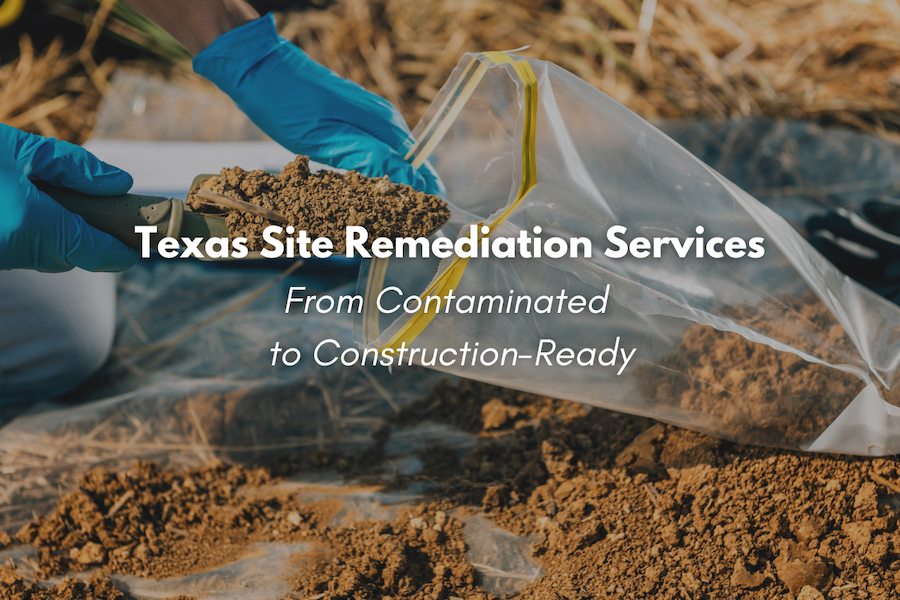
Before we start digging or treating, we need to understand what we’re dealing with. This step often begins with a Phase 1 Environmental Site Assessment (ESA), where we look at the history and old records of the property to get a better understanding of its past. ( This step can sometimes be skipped if we know that the property is contaminated). After that, we move onto a Phase 2 Environmental Site Assessment, which is where we collect soil and groundwater samples to identify contaminants, their concentrations, and how far they’ve spread.
This is a bit like taking an X-ray before surgery. It gives us the full picture so we can create the right remediation plan.
Step 2: Regulatory Compliance & Planning
In Texas, site remediation services are closely regulated by agencies like the TCEQ. We handle all the reporting, permitting, and compliance steps so our clients don’t have to stress about the paperwork.
The planning phase is also when we tailor the remediation strategy. For example, an industrial site with solvents in the groundwater might require in-situ chemical oxidation (injecting compounds that break down the contaminants underground), while a smaller site with petroleum in shallow soil might just need excavation and disposal.
Step 3: Implementation of the Remediation Strategy
Here’s where the boots hit the ground (sometimes literally). Depending on the site, we might:
-
Excavate contaminated soil and replace it with clean fill
-
Treat groundwater using chemical injections, pump-and-treat systems, or biological methods
-
Stabilize contaminants so they can’t migrate or pose a risk
-
Install vapor barriers to prevent harmful gases from entering future buildings
We also put safety first. Not just for our crew, but for the property owners, tenants, and the public. Dust suppression, spill prevention, and careful waste transportation are all part of our standard procedures.
Step 4: Verification & Reporting
Once the remediation is complete, we collect confirmation samples to prove the contaminants are below regulatory limits. Then we submit a Response Action Completion Report (RACR) or other closure documentation to TCEQ.
The result? You get official confirmation that the site is clean and ready for redevelopment which makes lenders, buyers, and future tenants much more confident.
From Contamination to Opportunity: A Texas Site Remediation Success Story
A few years ago, we worked on a former industrial site near Houston that had been sitting vacant for over a decade. The owners assumed it was unsalvageable due to the cost of cleanup.
After a thorough site assessment, we developed a phased remediation plan that allowed portions of the property to be redeveloped while other areas were being remediated. This meant the owners could start generating revenue from parts of the property while remediation continued.
Within 18 months, the entire site had received regulatory agency closure. Today it’s home to a thriving business.
The moral of the story: with the right strategy, site remediation services in Texas can be a stepping stone, not a roadblock to development.
Why Our Firm Is the Right Choice for Site Remediation in Texas
When you’re searching for a Texas site remediation services provider, you’re not just looking for a company with the right equipment,you’re looking for a team that knows how to handle Texas-specific regulations, soil conditions, and project timelines.
Here’s what sets us apart:
-
Over 30 years of experience serving clients across Texas
-
Full-service capabilities, from environmental assessments to full-scale remediation
-
Strong relationships with regulators, making the process smoother for our clients
-
Transparent communication, so you always know where your project stands
-
Proven track record of turning challenging sites into success stories
Questions to Ask Before Hiring a Site Remediation Company
Even if you don’t choose us (though we think you should), make sure you ask these questions:
-
Are they familiar with Texas environmental regulations and agencies like TCEQ?
-
Do they offer both assessment and remediation, or just one?
-
Can they provide examples of successful projects similar to yours?
-
Will they give you a clear cost estimate and timeline upfront?
-
How do they ensure safety during the remediation process?
If a company can’t answer confidently, keep looking.
Final Thoughts: Site Remediation Services Are an Investment, Not a Cost
At the end of the day, site remediation services aren’t just about removing contamination; they’re about protecting people, complying with the law, transforming underutilized land into something valuable.
Whether you’re buying, selling, or developing property in Texas, partnering with the right site remediation services provider can mean the difference between a stalled project and a thriving investment.
If you’re ready to find out what’s possible for your site, give us a call at CRG Texas Environmental Services. We’ll walk you through your options, handle the hard work, and get your land ready for whatever you have planned.