
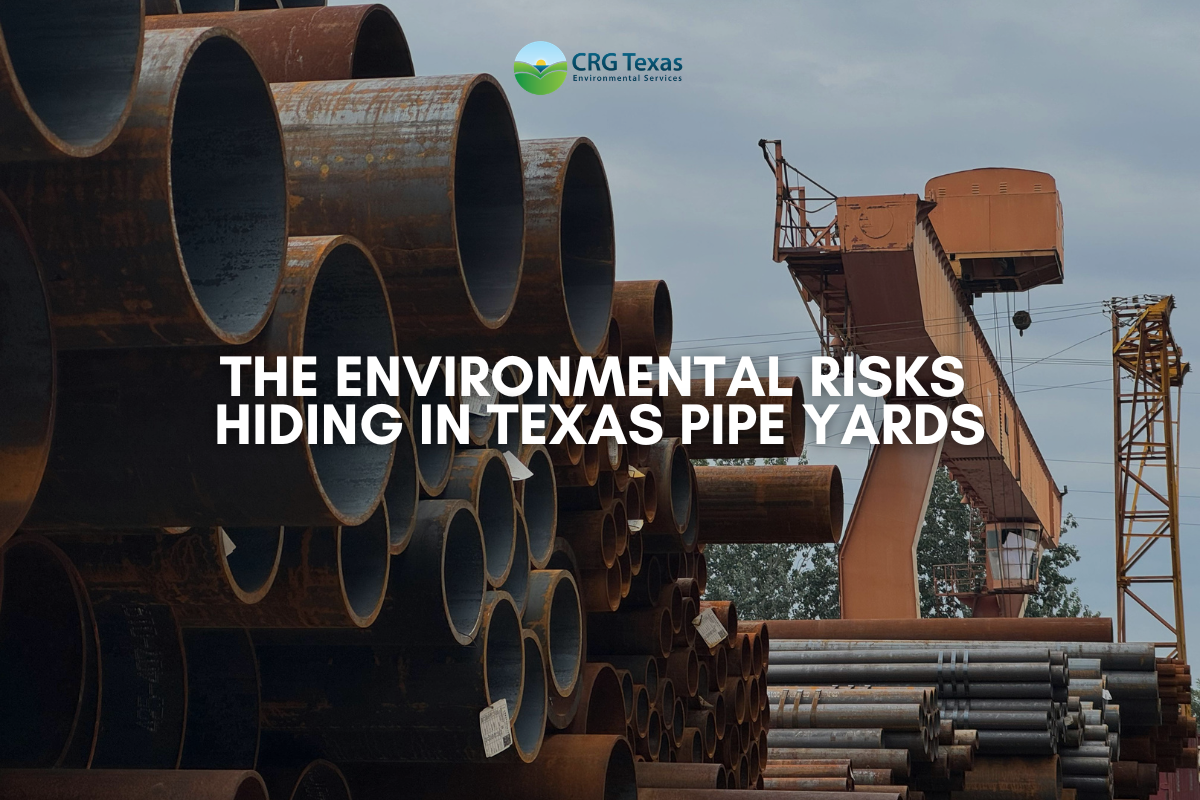
If you’re looking at acquiring a pipe yard in Texas, you already know environmental due diligence is part of the deal. What a lot of buyers don’t fully appreciate, though, is just how different a pipe yard is from your typical industrial property – and how much that difference matters when it comes to environmental risk.
This isn’t a reason to walk away from a deal. It’s a reason to walk in prepared. Here’s what a proper pipe yard environmental assessment looks like, what you’re likely to find, and how to make sure the process protects your investment instead of derailing it.
Why Pipe Yards Aren’t Just Industrial Real Estate
On the surface, a pipe yard looks simple – it’s a laydown yard. Pipe comes in, gets stored, maybe gets worked on, and goes back out. But the key detail is where that pipe has been.
Oil country tubular goods – casing, tubing, drill pipe – come directly from producing wells. They’ve spent months or years in contact with produced fluids, brine, and the subsurface formations that contain oil and gas. By the time that pipe reaches a yard for cleaning, inspection, or refurbishment, it’s carrying a history with it.
On top of that, the operations happening at pipe yards generate their own environmental footprint. Cutting, threading, cleaning, and reconditioning pipe all introduce chemicals, particulates, and waste streams into the environment – often over many years, on the same piece of ground. That accumulation is what sets pipe yards apart from a standard warehouse or storage lot.
The Hidden Hazards – What’s Actually in the Ground
This is the part that surprises most buyers, so let’s be upfront about it.
NORM and TENORM (Naturally Occurring Radioactive Materials)
This is the big one. The geological formations that produce oil and gas also contain naturally occurring radionuclides – radium, uranium, thorium, and their decay products. Over time, these materials deposit as radioactive scale inside pipe walls. When that pipe gets cut, reamed, or cleaned at a yard, that scale can become airborne or settle into the soil. NORM contamination at pipe yards is well-documented, regulated by the Texas Railroad Commission, and something every buyer’s environmental assessment needs to screen for.
Petroleum Hydrocarbons
Years of draining, handling, and cleaning pipe means petroleum hydrocarbons – TPH and BTEX compounds like benzene – are a near-universal finding at active or former pipe yards. The question isn’t usually whether they’re present, but at what levels and where.
Heavy Metals
Thread compounds used on pipe connections often contain lead and zinc. Pipe coatings can introduce chromium and other metals. These accumulate in surface soils over years of operation.
Solvents and Cleaning Chemicals
Chemical cleaning processes, including pickling and solvent degreasing, introduce acids, organic solvents, and their breakdown products into the environment. Older facilities may have residual contamination from chemicals that weren’t as tightly regulated in past decades.
PCBs
At older pipe yards – particularly those that handled gas transmission equipment – PCBs from compressor oils and lubricants can be a factor. They don’t break down easily, which makes them a priority finding in any Phase 2 investigation.
This isn’t meant to scare you. Every one of these hazards is manageable when identified early. The problem only becomes serious when it’s discovered after closing.
The Assessment Process – Phase 1 ESA , Phase 2 ESA, and Beyond
Environmental due diligence for a pipe yard follows the same framework as any commercial property transaction, but the bar for what triggers further investigation is realistically higher given the site history.
Phase 1 ESA
This is your starting point and, in almost every case, your lender will require it. A Phase 1 ESA is a non-invasive review – no sampling, no drilling. An environmental professional conducts a site visit, reviews historical records and aerial photography, researches regulatory databases, and interviews people with knowledge of the property. The goal is to identify Recognized Environmental Conditions (RECs): evidence of past or present releases of hazardous substances or petroleum products.
For a pipe yard, a Phase 1 will almost always identify RECs given the nature of the operations. That’s expected – and it’s exactly what the process is designed to catch. Phase 1 reports are valid for 180 days, so timing matters when you’re coordinating with a lender.
Phase 2 ESA
When Phase 1 identifies RECs – which it typically will at a pipe yard – Phase 2 ESA is the next step. This is where the physical investigation happens: soil borings, groundwater sampling, soil gas testing, and laboratory analysis. For pipe yards specifically, a well-scoped Phase 2 will also include radiological screening for NORM given the cutting and cleaning operations that are standard at these facilities.
Phase 2 results tell you what’s actually there, at what concentrations, and whether those levels exceed Texas regulatory thresholds. That data becomes critical for your negotiations.
Remediation (Phase 3) and Baseline Studies
If Phase 2 confirms contamination above actionable levels, Phase 3 – remediation – outlines the cleanup plan. This could range from soil excavation to groundwater treatment to long-term monitoring, depending on what was found.
For lease transactions, a baseline environmental study conducted before operations begin is equally important. It protects the incoming tenant from being held responsible for contamination that was already there.
What This Means for Your Transaction
Here’s the practical takeaway: contamination findings don’t have to kill a deal. In fact, a well-executed environmental assessment gives you leverage.
If a Phase 2 confirms petroleum-impacted soil or elevated metals, you now have documented data to renegotiate the purchase price, require the seller to remediate before closing, or factor cleanup costs into your financing structure. Buyers who skip or rush the assessment process don’t have that option – they inherit the liability.
From a lender standpoint, most institutional lenders require at minimum a Phase 1 ESA before financing a pipe yard acquisition. Many will require Phase 2 work based on the Phase 1 findings, and some will condition loan approval on a remediation plan being in place. Getting ahead of this early keeps your timeline on track.
Texas adds another layer through the Railroad Commission and TCEQ, both of which have specific requirements around NORM disposal, petroleum contamination reporting, and cleanup standards that differ from federal baselines. Knowing those rules – and having an environmental partner who works in them daily – matters.
Why You Need a Texas-Specific Environmental Partner
Not all environmental consultants are equally equipped to handle oilfield properties. Pipe yard assessments require familiarity with NORM regulations, oilfield chemistry, and the specific Texas regulatory environment – the Railroad Commission’s NORM rules, TCEQ’s remediation standards, and how those interact with your transaction timeline.
At CRG Texas Environmental Services, we’ve worked on properties across the state, from the Permian Basin to the Gulf Coast. We understand what pipe yards look like environmentally, what lenders expect to see in the report, and how to scope Phase 1 and Phase 2 work that actually answers the right questions – not just checks a box.
We walk you through the findings, explain what they mean for your deal, and help you figure out the smartest path forward.
Ready to Move Forward?
If you’re evaluating a pipe yard acquisition in Texas, the best time to bring in an environmental consultant is before you’re under contract – not after. Early assessment gives you the most options and the most leverage.
Contact CRG Texas Environmental Services today to talk through your project. We serve buyers, investors, and lenders across all of Texas and we’re ready to help you get to closing with confidence.
📞 Call us or visit our website to schedule a consultation – no pressure, just straight answers.