
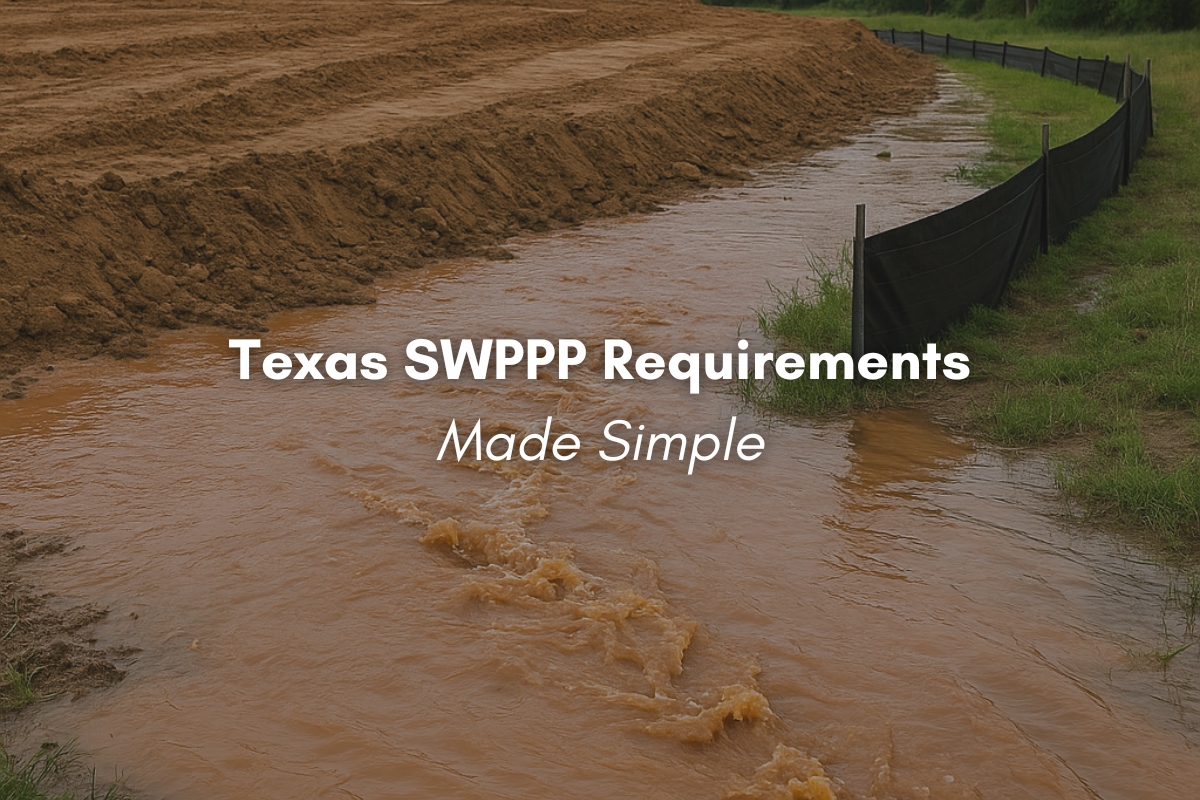
If you’re gearing up for construction in Texas, take a moment. This isn’t just about getting heavy equipment in place, mobilizing crews, and beginning site work – you also need to handle regulatory requirements tied to stormwater management and, more importantly, the Texas SWPPP requirements enforced by the Texas Commission on Environmental Quality (TCEQ).
With over three decades in the environmental consulting arena, our firm has helped hundreds of Texas contractors meet SWPPP requirements quickly and correctly, avoiding costly delays and fines. Let’s walk through exactly what the Texas SWPPP requirements are – and what you need before breaking ground.
Why SWPPP Matters Before You Break Ground
When it rains (or even when it’s just a run-off event), water flowing over a construction site picks up sediment, debris, fuel, concrete wash-out, and chemicals – and carries them into ditches, creeks, and eventually larger bodies of water. That’s bad for the environment, for your reputation – and for your schedule.
In Texas, the SWPPP (Stormwater Pollution Prevention Plan) falls under the Texas Pollutant Discharge Elimination System (TPDES) Construction General Permit (TXR150000). Understanding Texas SWPPP requirements before breaking ground helps contractors protect their projects from violations and ensure environmental compliance.
Simply put: before you disturb soil, you need to confirm whether your project requires a SWPPP, a Construction Site Notice, or full permit coverage under TCEQ’s guidelines. Knowing and acting early keeps you compliant and stress-free.
Understanding the Basics: What Is a SWPPP and Why It’s Required in Texas
A SWPPP (Stormwater Pollution Prevention Plan) is a written document describing how your project will prevent pollutants from leaving the construction site through stormwater runoff. Under Texas SWPPP requirements, every site disturbing one acre or more must prepare and implement a site-specific plan.
This plan includes:
- Site maps and drainage patterns
- Best Management Practices (BMPs) such as silt fences, stabilized entrances, or sediment basins
- Inspection schedules and documentation
- Training responsibilities and emergency contacts
The Texas SWPPP requirements are enforced by TCEQ through the Construction General Permit (TXR150000). Sites disturbing one acre or more – or part of a larger plan exceeding one acre – fall under this regulation. Even smaller projects can be regulated if part of a larger development.
Key Texas SWPPP Requirements You Must Know
Let’s break down the most important components contractors must meet to stay compliant.
A. Site Assessment & Planning
Before the first bucket hits the ground:
- Identify drainage patterns, slopes, soil types, and proximity to waterbodies.
- Pinpoint potential pollutant sources: fuel storage, concrete washouts, and equipment staging areas.
- Verify whether your project qualifies under Texas SWPPP requirements or falls under another category.
- Engage an environmental consultant familiar with Texas regulations for accurate evaluations.
Proper planning ensures your SWPPP meets Texas requirements before construction begins.
B. Erosion and Sediment Controls
Once you disturb topsoil, things move fast – literally.
- Install BMPs required by Texas SWPPP regulations such as silt fences, inlet protection, and stabilized entrances before major grading.
- Maintain these controls throughout the project.
- Update your SWPPP as site conditions change.
A real-world example: On a Houston-area project, a contractor delayed installing silt fences until after grading. A heavy rain sent sediment downstream – resulting in fines that could’ve been avoided with early compliance.
C. Inspections and Maintenance
Your SWPPP isn’t “set it and forget it.”
- Conduct inspections at least every 14 days and within 24 hours of 0.5-inch rainfall events, as stated in the Texas SWPPP requirements.
- Document all inspections and maintenance actions.
- Revise BMPs if they fail or site conditions change.
Consistent documentation is one of the most overlooked parts of SWPPP compliance in Texas – and one of the most important to regulators.
D. Recordkeeping & Reporting
You must:
- Keep your SWPPP plan onsite and available for inspection.
- Post a Construction Site Notice at the site entrance.
- File a Notice of Intent (NOI) for sites over five acres, or smaller if part of a larger plan.
- Submit a Notice of Termination (NOT) when final stabilization is complete.
All of these steps are explicit Texas SWPPP requirements – and skipping them can lead to enforcement actions from TCEQ.
Common Mistakes Contractors Make (and How to Avoid Them)
With 30+ years in the field, we’ve seen the same SWPPP mistakes across Texas projects:
- Starting construction before SWPPP approval
- Using generic, non-site-specific plans
- Failing to maintain or update SWPPP documentation
- Skipping post-rainfall inspections
- Not training subcontractors on BMPs
Each of these issues violates Texas SWPPP requirements and can result in costly project delays or fines. Proactive compliance is always cheaper than reactive corrections.
How to Stay Compliant from Start to Finish
Follow this simple roadmap to meet all Texas SWPPP requirements and keep your project moving:
- Hire a qualified environmental consultant familiar with TCEQ stormwater rules.
- Develop a site-specific SWPPP tailored to your project.
- Determine which permit level applies (1-5 acres or 5+ acres).
- File and post the required notices and permits.
- Install erosion controls before grading begins.
- Conduct regular inspections and document maintenance.
- Update your SWPPP as site changes occur.
- Terminate your permit properly when the project is complete.
Why Work with a Texas-Based SWPPP Expert
Partnering with an experienced environmental consulting firm ensures:
- Full compliance with current Texas SWPPP requirements and TCEQ updates.
- Accurate, customized plans (not templates).
- Guidance on NOI, NOT, and inspection recordkeeping.
- Hands-on field support from a team that understands Texas soil and rainfall patterns.
For over 30 years, our team at CRG Texas Environmental Services has helped developers, contractors, and municipalities stay compliant under Texas SWPPP laws, protecting both their projects and the environment.
Final Thoughts: Start Clean, Stay Compliant
Breaking ground is exciting – but ignoring Texas SWPPP requirements can turn that excitement into stress.
By understanding the regulations, developing a strong plan, and working with a qualified environmental professional, you’ll keep your project on track and avoid costly delays.
If you’re preparing to break ground in Texas, contact CRG Texas Environmental Services. We’ll ensure your SWPPP meets every requirement, so you can focus on building, not battling compliance issues.