
Location: Richmond, Texas Project Type: Permanent UST Removal, Confirmation Sampling & Regulatory Closure Provider: CRG Texas Environmental Services, Inc.
The Site
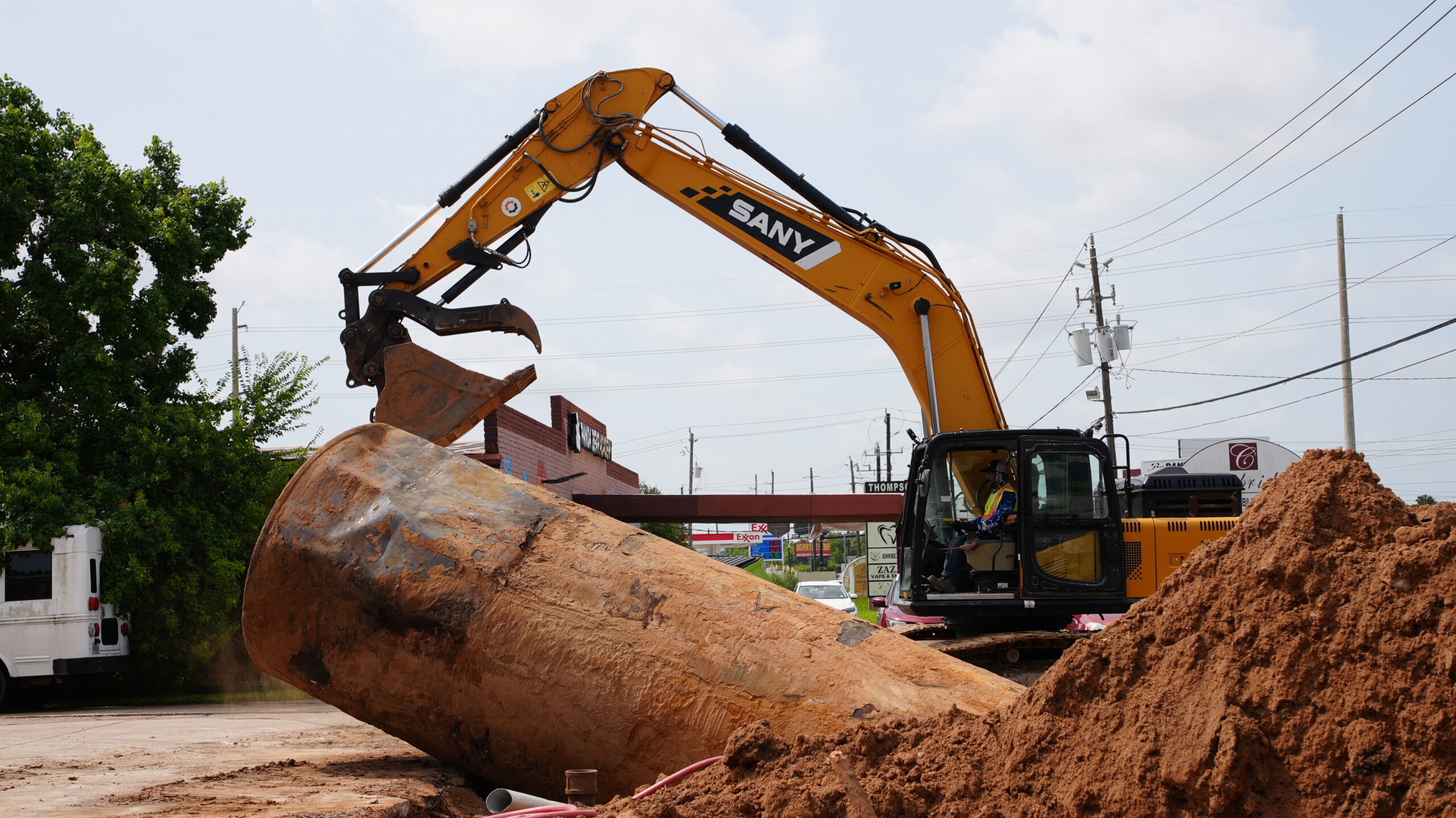
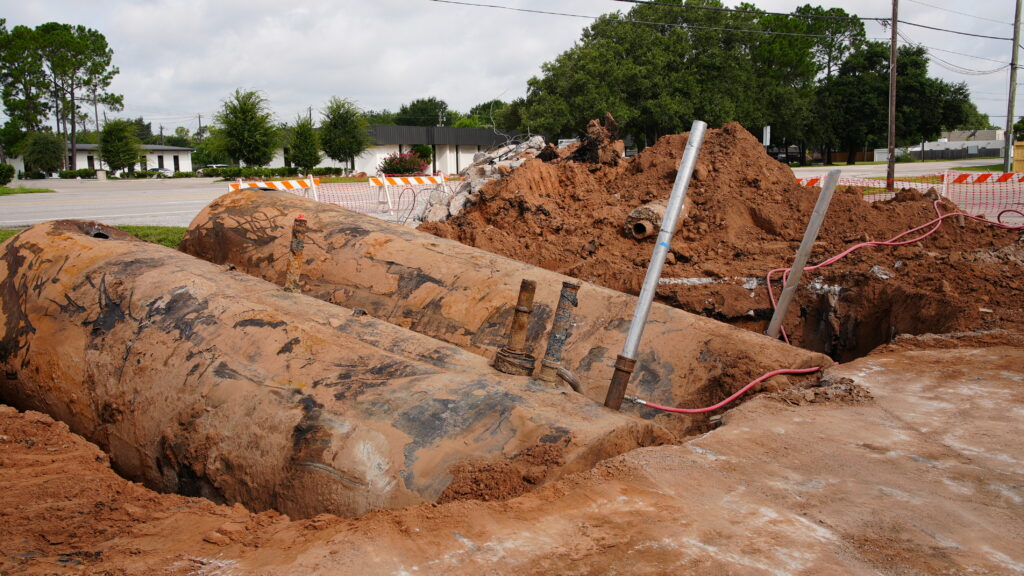
A former retail fuel station in Richmond, Texas had two single-wall steel underground storage tanks (USTs) still in the ground – 10,000-gallon gasoline tanks installed back in 1979. Along with the tanks came roughly 20 feet of fuel piping, two dispensers, and a metal canopy, all sitting on a site registered with the Texas Commission on Environmental Quality (TCEQ).
The property owner needed the entire fuel system permanently removed, the site properly closed out with the TCEQ, and – most importantly – documented proof that decades-old tanks hadn’t left behind a contamination problem.
The Challenge
Tanks installed in 1979 come with real unknowns. Nearly 50 years underground means any of the following could turn a routine removal into a much bigger (and costlier) project:
- Corrosion holes that led to product leaking into the soil
- Elevated hydrocarbon levels from decades of use
- Pit water requiring separate handling and disposal
- Regulatory delays from permitting, utility locates, or fire marshal coordination
Getting this wrong doesn’t just delay a project – it can trigger full-scale remediation, extended TCEQ oversight, and costs far beyond the scope of a standard tank pull.
The Approach
CRG Texas managed the project end to end, handling every regulatory and physical touchpoint:
Pre-Removal Coordination
- TCEQ construction notification and local fire department permit
- Texas 811 / Dig Tess 48-hour utility locate
- Site-specific Health and Safety Plan (HASP)
- NELAP-certified lab coordination for sample analysis
Physical Removal
- Exposed tanks and piping, removed fuel dispensers and canopy
- Drained and blew back all fuel lines
- Purged tank vapors with an air compressor and eductor until inert
- Verified 0% LEL (lower explosive limit) in each tank before cutting them free
- Removed and recycled both tanks, the piping, and the dispensers
Confirmation Sampling
- Collected six soil samples beneath the two tanks (three per tank, at 12 feet below grade) plus one stockpile sample
- Followed strict chain-of-custody and decontamination protocols throughout
- Tested for BTEX/MTBE, TPH, and PAH compounds per TCEQ RG-411 guidance
Closure & Reporting
- Prepared the full TCEQ Release Determination Report
- Filed amended UST registration forms
- Transmitted the final report to TCEQ on the client’s behalf
All work followed TCEQ Regulatory Guidance RG-411 for investigating and reporting releases from petroleum storage tanks, and was performed by CRG Texas’s TCEQ-licensed corrective action specialists, project managers, and PST contractors.
The Results
- Both tanks removed with no corrosion holes – a strong outcome for equipment nearly 50 years old
- No pit water encountered, simplifying disposal requirements
- BTEX/MTBE compounds below TCEQ action levels in every soil sample collected
- One stockpile sample showed detectable TPH in the diesel/oil range, triggering the required follow-up PAH testing – which also came back below action levels
- Conclusion: No Further Action required. The site was cleared with clean, defensible data supporting full regulatory closure
Why It Matters
For property owners and developers, an unresolved UST is more than a compliance checkbox – it’s a liability that can stall financing, sales, or redevelopment until it’s resolved. This project shows what a clean closure looks like: proactive permitting, careful field execution, rigorous sampling, and a final report that gives the TCEQ – and the property owner – confidence the site is clear.
CRG Texas Environmental Services, Inc. is a Texas Board of Professional GeoScientists Firm, TCEQ Registered Corrective Action Specialist, and TCEQ-licensed Petroleum Storage Tank Contractor.